Ikon presents a major solo exhibition by multidisciplinary artist Htein Lin from Myanmar.
Evoking his lifelong commitment to documenting human experience in difficult times, it shows a comprehensive selection of the artist’s paintings made while he was a political prisoner from 1998 to 2004 on prison uniforms and found textile, alongside drawing, sculpture, video and new work. Htein Lin also makes new artworks with residents of HMP Grendon, Buckinghamshire, exploring prison art in Britain and Myanmar.
At Ikon Gallery, Htein Lin’s new large-scale painting, Fiery Hell (2024), portrays the plight of Myanmar’s rural populations, including ethnic and religious minorities, caught up in the ongoing civil war. Red-gold flames surround figures carrying children, the elderly and animals, fleeing villages set on fire. Resilience in the face of decades of oppression in the country is highlighted in A Show of Hands (2013-), an installation of 12 plaster casts of the hands of former political prisoners from Myanmar. Inspired by the artist’s experience of healing a broken arm in a plaster cast after a cycling accident, the ongoing project records the sacrifice of former detainees and enables them to reunite and share their memories while having their hands moulded by the artist.
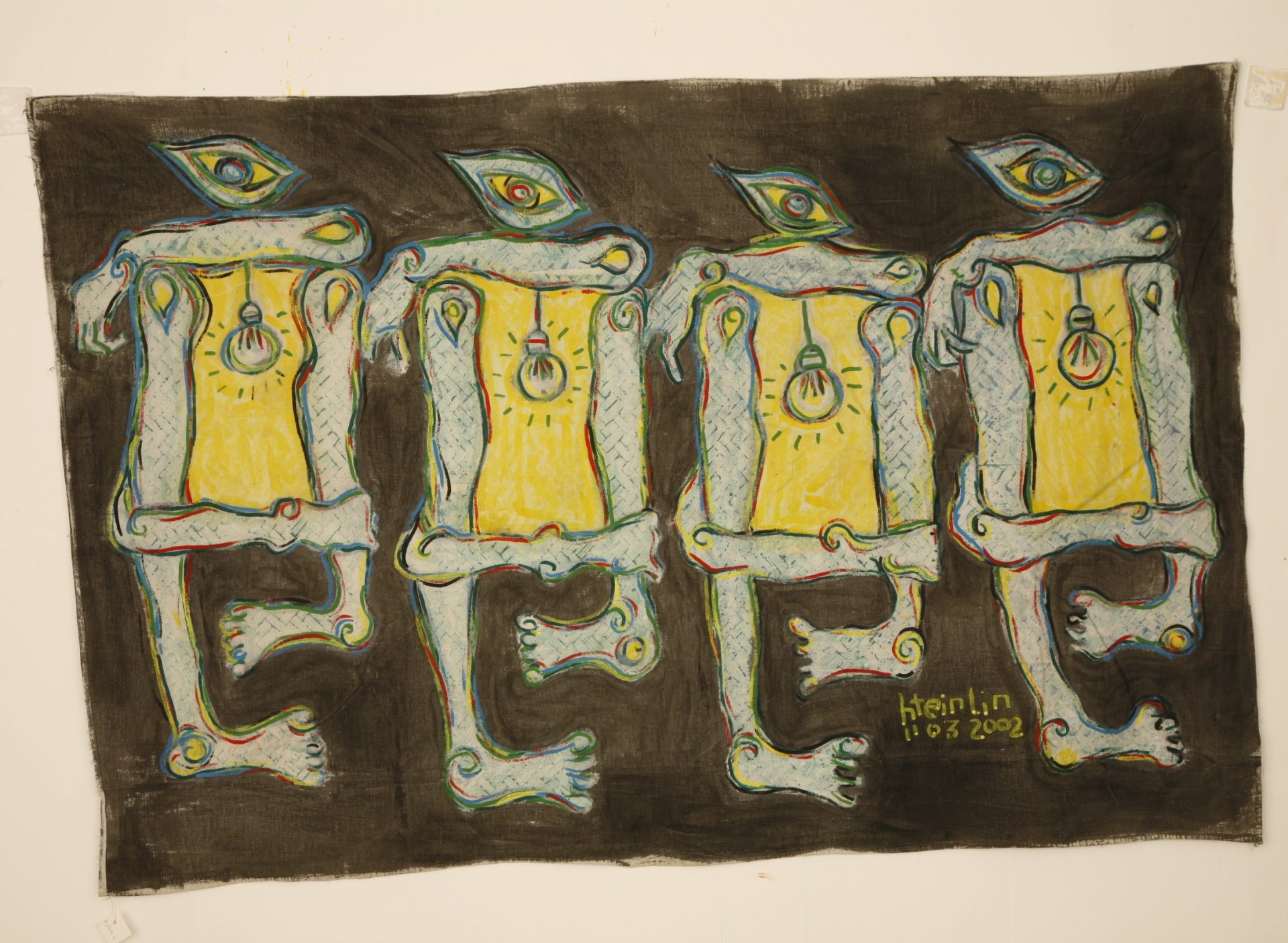
At the centre of the exhibition are over 45 works from the 000235 series (1998-2004). Titled after Htein Lin’s International Committee of the Red Cross (ICRC) number, they demonstrate the ingenuity and originality of his art made in confinement: printed and drawn labyrinths of swirling arteries, suffering organs and razor-sharp bones marked with the tops of toothpaste tubes, medical bottles and pill packets (Biology of Art, 1999); vibrant self-portraits painted with syringes, bowls and the artist’s fingers in the absence of brushes (Self-portrait, 2000; Peacock Self-portrait, 2002), and poignant representations of prison cells isolated by interlocking limbs (Sitting at Iron Gate, 2002). The time-stamped paintings record the rhythm and emotions of prison life: excitement for the new millennium (Happy New Year II, 2000); longing for pleasure (Dancers, 2000); and darkness mitigated by hope, fostered through Buddhism and daily Vipassana meditation (Parinivana, 2000).
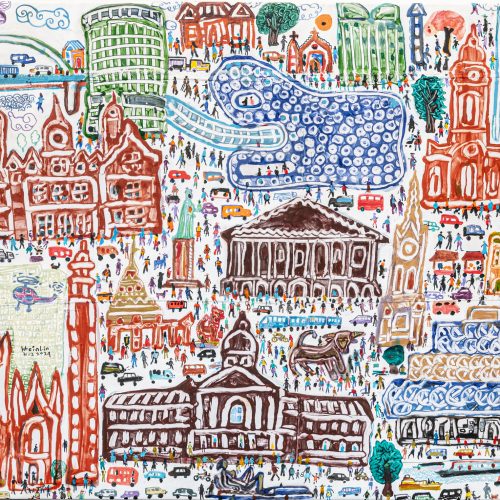
Htein Lin’s visual language is further explored in a selection of drawings from the 1990s and 2000s. Shown in public for the first time, they evidence his early interest in using everyday objects as painting tools and street life in Myanmar. In comparison, How do you find Birmingham? (2024), a new painting commissioned by Ikon, forms a vibrant panorama of the bustling city. Part of a wider series featuring cities including London, Belfast and Barcelona, its title references Htein Lin’s interpretation of the friendly question from locals when he moved to the UK and visited other foreign countries from 2006. It combines architectural icons such as Birmingham’s Central Library and Dhamma Talaka Peace Pagoda, the only Buddhist temple in Europe built in the traditional Burmese style.
Video works give an insight into Htein Lin’s writing and performance. The Fly documents a 2005 performance in Yangon at the Institut Français following his release from prison in 2004. First performed for inmates while he was in prison, the work was inspired by George Langelaan’s 1957 short story in which a fly enters a room and influences subsequent events, reminding him of the flies he had encountered while being interrogated in prison. When I was a Lousy Millionaire (2022) revisits the artist’s time as a member of the All Burma Students’ Democratic Front (ABSDF) in a jungle-based resistance movement fighting for democracy and human rights. After a devastating internal rupture between two factions, Htein Lin was severely tortured and saw over thirty of his comrades killed by other rebels. Beginning with an account of the friendly communal removal of headlice in his village, he draws a parallel to his first experience of body lice while chained in freezing mountain temperatures, examining the moral choices made about killing in times of conflict.
A key element of Htein Lin’s project for Ikon includes artworks made with residents of HMP Grendon in Buckinghamshire. An off-site exhibition at the prison (1 – 22 May), includes portraits of prison residents and soap block sculptures inspired by the artist’s carving technique. The display follows workshops developed in collaboration with current HMP Grendon Artist in Residence Simon J. Harris, and explores subjects, materials and tools synonymous with prison art in Britain and Myanmar.
“Although I am currently unable to travel outside of Myanmar, knowing that my work is being shown in exhibitions overseas like Ikon keeps open a window for me to look out on the world. It also offers a chance for the world outside to see what is happening in Myanmar”. Htein Lin
This exhibition is supported by the British Council’s Connections Through Culture grants programme and ai. gallery.