By Carl Potter, Head of Birmingham office at Avison Young
After working at Brindleyplace for 25 years, I should know a thing or two about not just how the estate works, but also why it works.
Avison Young’s Birmingham office has been based at Three Brindleyplace since the building opened in 1998. And in that very fact lies one of the truths about the estate: after more than two decades, the buildings are just as relevant, spacious and flexible today as the day they were built.
They were amongst the first of a new generation of grade A buildings built in Birmingham that truly fulfilled the needs of the modern occupier – with larger, well configured floorplates that included lots of daylight, amenities and modern control systems.
This resilience, woven into the very fabric of Brindleyplace, means companies have been able to commit to staying here long term and to grow and adapt along with the estate around them.
It also makes the buildings highly sustainable and now they’re approaching a quarter century old, greener than ever thanks to continuous investment and innovation, and with ever less embodied carbon compared to new build alternatives.
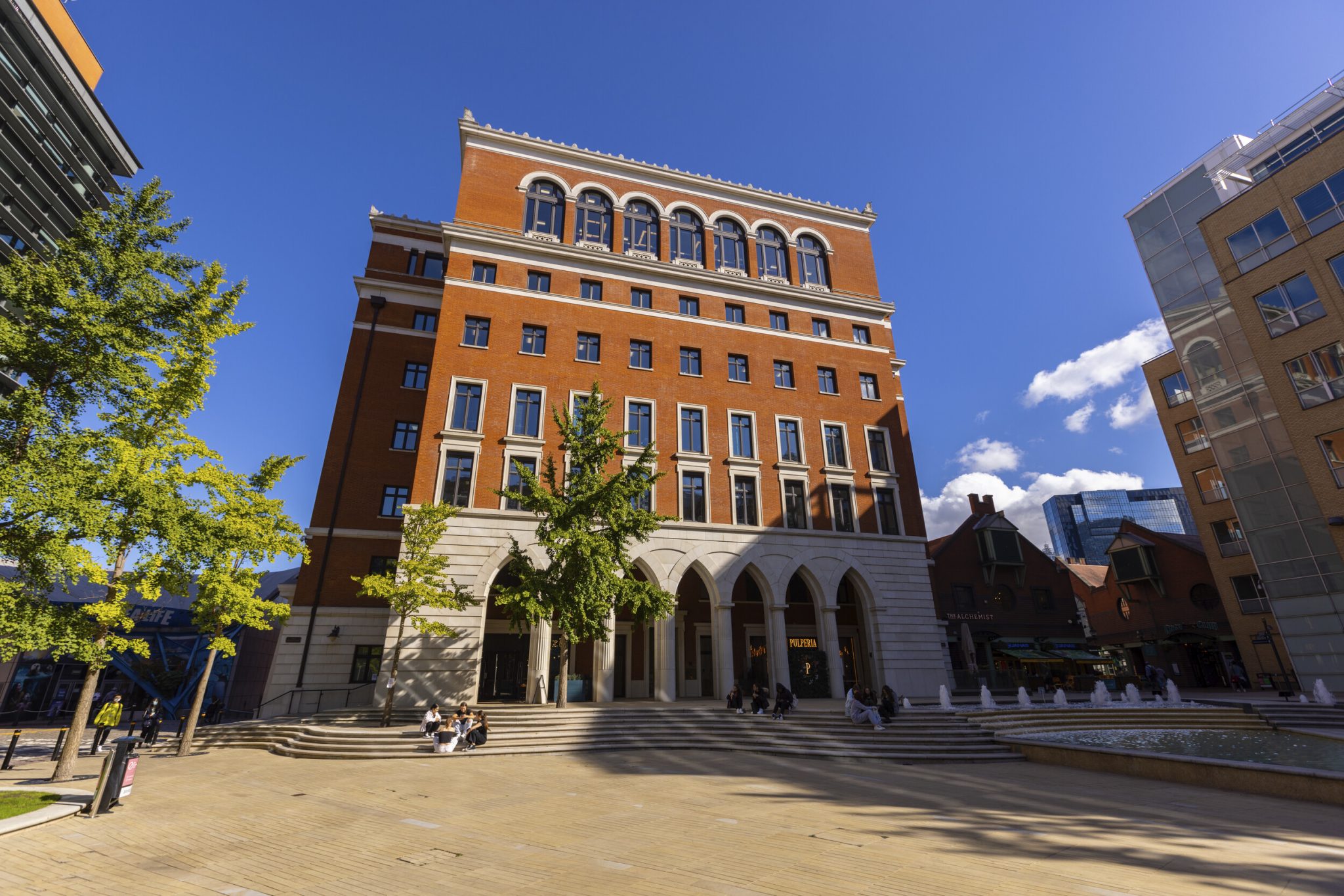
Many of the buildings across the estate, including Three Brindleyplace, are steel framed, which leads to much lower carbon than concrete framed equivalents.
But Brindleyplace is obviously about much more than just the design and build quality of its commercial buildings. Ultimately, it’s about the spaces between the buildings – the public realm, squares and walkways, the leisure and cultural offering – that makes such a difference to this very special location.
For a company like ours, it’s always been about being in a location that works not just for our people, but for all people.
The pandemic led all of us to reassess how and where we work, the type and amount of work we carry out, and how we can better serve clients both in person and through technology.
That has worked its way through into Brindleyplace and underlined its existence as not just a business destination, but as an estate with a real holistic approach which offers something for everyone.
Take the exceptionally strong leisure offering. This is something that is easily overlooked when you first start working here. Yet that offer brings people in from across the city right around the clock and all year round. And it’s an offer which I think is just getting better and better as it continues to evolve.
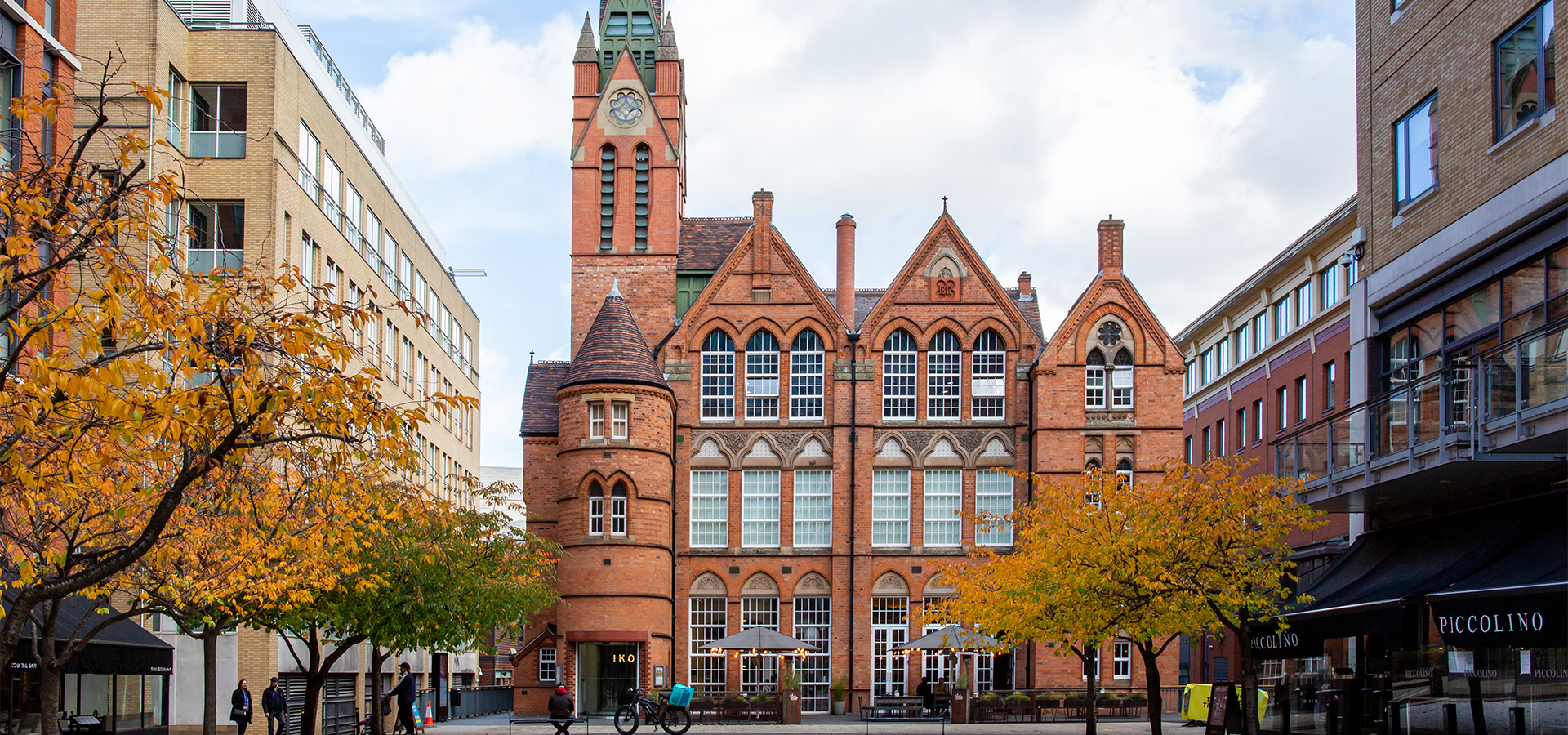
And it’s not just about eating out or having a late night drink. It’s about the cultural hotspots of the Ikon and Crescent and the family friendly attractions like Sea Life.
Few other mixed use developments in the world – especially outside of capital cities – can boast a genuine cultural offer as well as a business one, or curate such quality public realm that helps attract 4 million visitors a year.
It’s that genuine combination of meeting both a business and leisure audience that has always been the USP here and what has made Brindleyplace so successful. It has served as a template for other development which followed in the UK and indeed, across Europe after the turn of the millennium.
Today, the term mixed use has become ubiquitous, but it’s still actually a tricky balance to get right. It’s not just about having leisure units on the ground floor of office buildings. To work, the approach needs to go much further than that and here we have dedicated buildings for leisure and culture, some of them designed by Sir Norman Foster.
So, the hierarchy isn’t necessarily about business space first, it’s actually about people space first, whatever that may be, and that’s been an enduring legacy of the estate.
And this leads to another of Brindleyplace’s enduring strengths – its ability to respond to the challenges thrown at it.
Over the years these challenges have been economic, social, and structural. The way the estate handled the pandemic and the on-going push towards even greater sustainability are just two examples of how Brindleyplace can manage global – and local – priorities simultaneously while always placing the security and wellbeing of the people who work here and visit at the front of change.
The growth of residential development across Birmingham’s Westside stems from the very first modern private residential estate in the city – Symphony Court – built as part of Brindleyplace in the mid 1990s. Symphony Court underlined the wider social impact of new commercial development on this part of Birmingham and the growth in demand from young professionals in particular within the housing market.
The change in Broad Street has been many years in the making and the street has now found its purpose; becoming the city’s number one address for major residential schemes as well as a leisure destination. This focus is regenerating some of the more tired buildings on the street while also bringing more and more people into its orbit.
Improved transport links, thanks to the West Midlands Metro – and a dedicated Brindleyplace tram stop – is another game changer and shows that our own confidence in the estate and the Westside district over the past 25 years has been well placed.
Like everything, demands evolve, and many new industry sectors will make their mark on Brindleyplace and on Birmingham in the coming years. And as the market changes, the appeal of our city centre to new sectors will grow. Clusters including tech and life sciences will influence the way we work and enable us to better meet the demands of our clients.
These changes all contribute to the continuing relevance of the estate and its place at the heart of the city’s business community – a place we and our people have always found to work for us.
Above all, it’s a place of genuine community – of so much more than just bricks and mortar – and that is something that’s always hard to find.