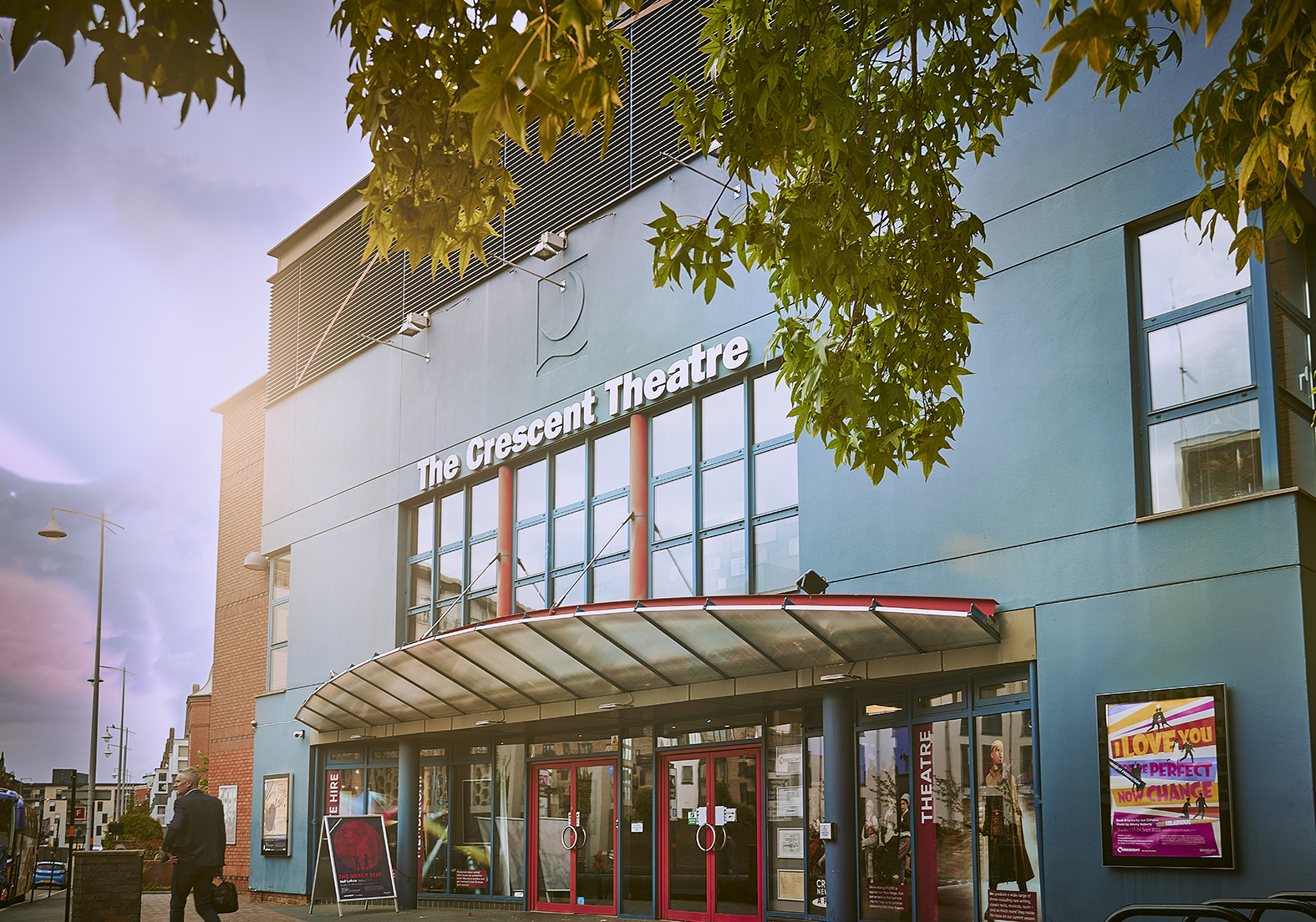
Birmingham’s Crescent Theatre celebrates its centenary this year. As a unique venue that has always been on a mission to bring quality drama to the city and its people, the Crescent also has a tradition of community involvement.
Founded a hundred years ago this year, the Crescent began life as a Christmas revue by council employees at the city’s Council House.
What began life as the Municipal Players entertained audiences from across the city during the inter-war years and found their first permanent home at numbers 17-19 The Crescent, a row of Georgian buildings just to the north of Cambridge Street, in 1932.
Re-named the Crescent Theatre, after the war the group helped set up a national organisation for small theatres, as well as continue its efforts with a new youth theatre and its own drama school – just some of the ideas successfully championed by founder and first chairman, Norman Leaker.
The group flourished at The Crescent – the location where four tower blocks known as Civic Close sit today. When the council offered to build the group a brand new arts centre in the early 1960s at Cumberland Street off Broad Street, the group jumped at the opportunity. This purpose built theatre opened in 1964 with a revolutionary revolving stage and a near 300 space main auditorium.
In the late 1980s as the regeneration of Birmingham accelerated, Cumberland Street became central to the planned mixed use development of Brindleyplace, and the theatre moved once more.
The Crescent opened its new Brindleyplace home in 1998, fronting Sheepcote Street, and became one of the largest amateur theatres in the UK. The main auditorium has 340 seats along with the Ron Barber studio, with space for 120, and further performance spaces in the Lawrie Bar and Roma’s Room.
Now 25 years in its third permanent home, the Crescent continues to go from strength to strength with a full programme of home-grown and touring productions in place.
The theatre’s ongoing commitment to representing Birmingham’s diverse communities and different tastes feeds through into the extensive and wide ranging programme produced every year. Everything shown at the theatre is of the highest quality, whether these are home-grown productions or part of a tour.
Artistic quality and community involvement remain the touchstones of the theatre and everything it does. By placing people first, the theatre has a long tradition of encouraging skills and training for people of all ages and backgrounds, from actors and musicians to front of house and admin staff. This has helped make the theatre a breeding ground for professional talent and people involved in the Crescent often go on to careers on stage, in film and on television.
For more information on the Crescent, please visit
www.crescent-theatre.co.uk