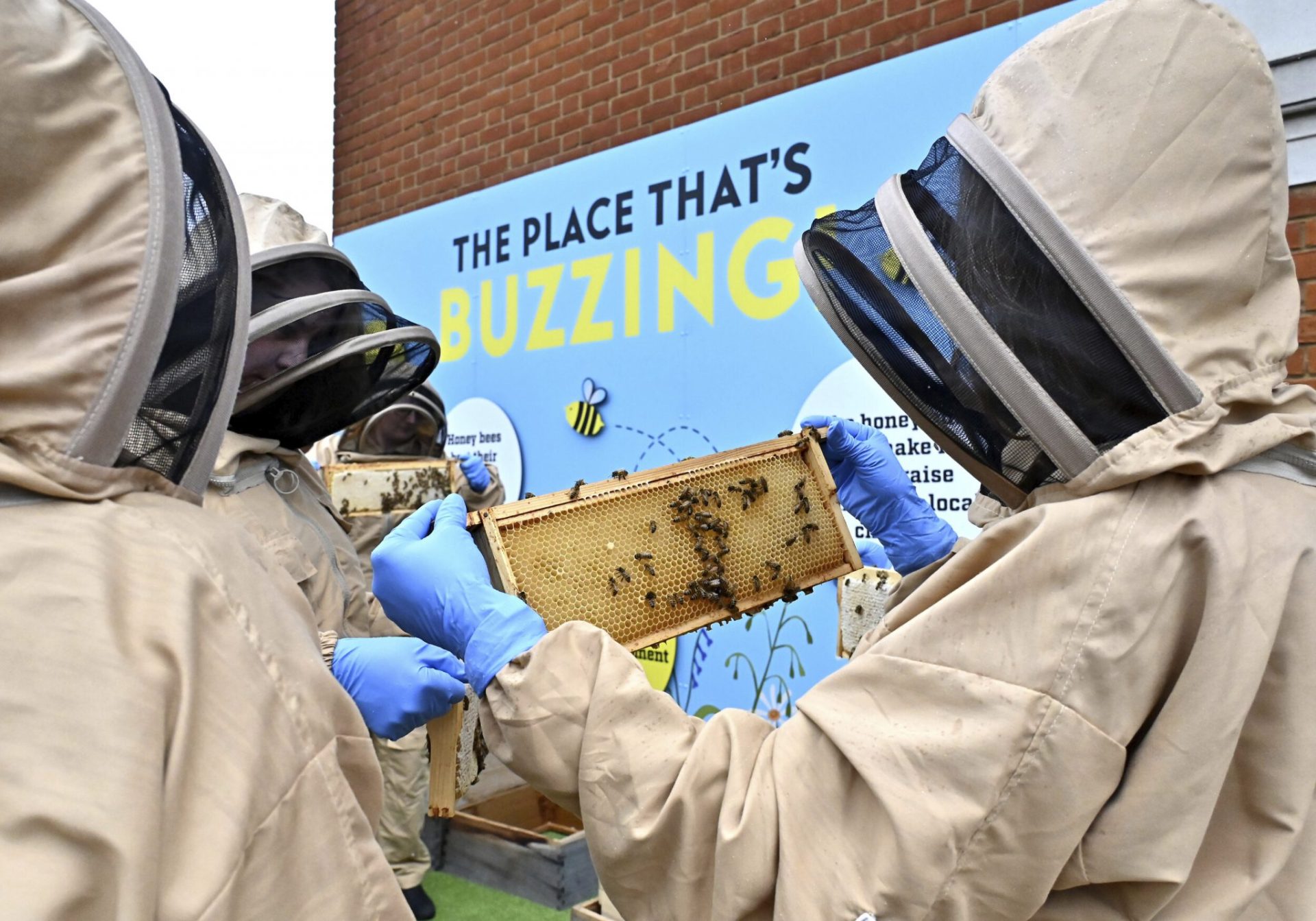
Bees and beekeeping probably aren’t the first thing that springs to mind when you think of Brindleyplace but high up on the roof of 3 Brindleyplace it is literally a hive of activity. Two hives in fact that are home to over 80,000 honey bees since 2018.
Concerns over the declining numbers of bees in Britain has led to a growing demand for landowners and businesses to help bring more bees to urban areas and boost effective pollination in cities.
By encouraging bees to make their home at Brindleyplace the estate is supporting the vital process of pollination enabling plants to reproduce. An estimated third of all food crops require pollination and without the necessary number of pollinators, we wouldn’t be able to grow the crops necessary for food. Honeybees play a vital role in this process which is why some beekeeping courses have been made available to educate people that work at Brindleyplace about their importance and positive impact they have on our environment.
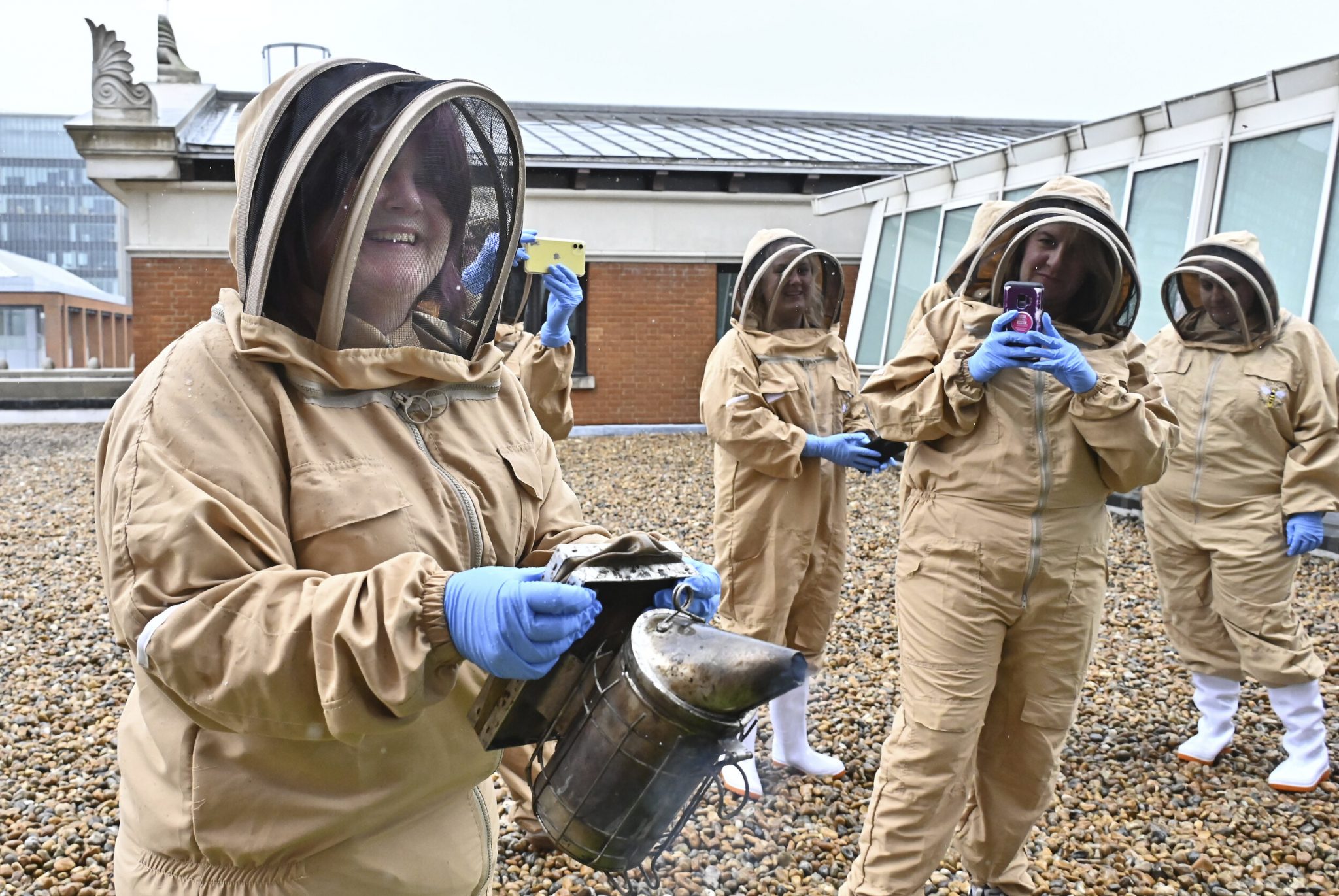
John Beavan is Brindleyplace’ head beekeeper and has overseen the first beekeeping courses during August with more scheduled for September. Participants have received a privileged ‘Bee’s eye view’ of how a hive functions and the honey-making process.
John said: “For a city-centre location, Brindleyplace is blessed with a superb environment for bees and the pollination process. There are a number of open spaces in addition to the nearby canals at Water’s Edge and beyond that provide a range of flowers that attract the bees. Offering these beekeeping courses is a wonderful way to open people’s eyes to the importance of the work that bees do and how Brindleyplace is supporting the pollination process and the environment.”

The hive benefits don’t end there though. Following the extraction process, the honey that is produced at Brindleyplace is then sold with all the proceeds going to ‘The Ladywood Project’ charity that supports local families experiencing poverty or financial hardship.
Next time you see a bee buzzing around Brindleyplace, remember how hard it is working, not just for the benefit of its colony on the roof but for the wider benefit of our own environment.