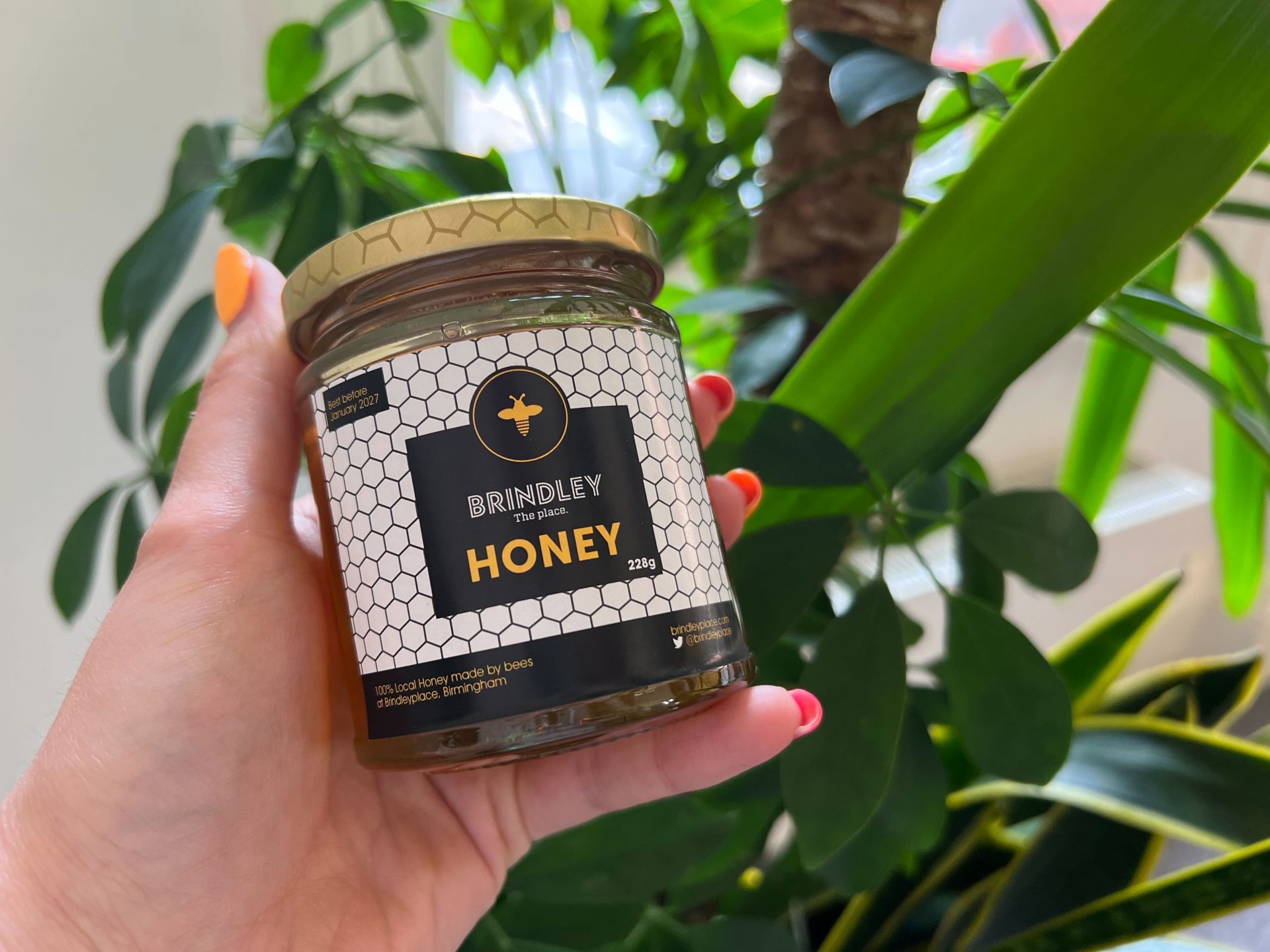
Environmental initiatives are always high on the agenda at Brindleyplace with Honeybees and other pollinators supporting the world's ecosystem. Throughout the estate we're playing our part to keep more bees in the heart of Brum.
It’s World Bee Day and today we recognise honeybees and other pollinators. Did you know that the rooftop of 3 Brindleyplace has been home to more than 80,000 honeybees since 2017? The honey they’ve produced over the last five years is the sweet taste of success for our beekeeper.
There’s so much about honey that we didn’t know and Laura Clayton, Brindleyplace’s Wellness Consultant, has provided us with some great facts about this super food.
Eating honey can…
– Make you smarter! It is the only food to contain ‘pinocembrin’ that is an antioxidant that improves brain function.
-Improve your mood! Honey releases serotonin, a neurotransmitter that improves your mood
-Help you sleep! The body converts serotonin into melatonin, a chemical compound that regulates the length and quality of sleep.
Honey is also…
-Antiseptic. Applying honey to wounds inhibits the growth of certain bacteria and helps keep external wounds free from infection. Honey is also anti-fungal as it naturally contains hydrogen peroxide, an antiseptic.
-Antiviral. A study of Manuka honey found that it inhibited viruses.
-Antimicrobial. Just two teaspoons of honey can help cure a persistent cough. Honey not only soothes the throat, but also kills certain bacteria which cause the infection.
-Antioxidant – Adding just one spoonful of honey with half a juice of a lemon to warm water in the morning can help improve the digestive system, boost immunity and protect the body from inflammation.
-Probiotic . Honey can help to ferment beneficial bacteria in the gut, including bifidobacteria and lactobacilli. This shift has been linked to stronger immune function and enhanced mental well-being.
-Honey’s polyphonic antioxidants in the blood could help prevent heart disease.
-Honey’s natural sugars prevent fatigue during exercise, so it is also good for improving athletic performance. The glucose in honey is absorbed by the body quickly, giving an immediate energy boost, while the fructose provides sustained energy since it is absorbed more slowly.
Those with diabetes also need to be careful around their blood sugar levels when consuming honey, as it is high in sugar. The NHS also advises not to give honey to children under the age of 1 year old.
Brindleyplace is hoping to add further rooftop hives in the future to further support the environment and ecosystem. We are privileged to have an abundance of outdoor spaces available in a city-centre setting and initiatives such as this ensure that Brindleyplace is leading the way when it comes to green initiatives in Birmingham.